
Speed up and improve fraud detection for card payments
Target Audience
Banks and financial institutions, insurances, merchants
Challenge
Fraudsters steal millions of payment card numbers through malware, spyware, and card skimming, then sell partial card data on illegal websites. Traditional detection methods struggled to identify compromised cards quickly enough, and banks had limited ability to predict which cards were at risk before fraud occurred.
Solution Approach
Mastercard built Decision Intelligence Pro, trained on data from 125 billion annual transactions. The system scans transaction data to identify fraud patterns, then uses generative AI to predict full 16-digit card numbers from partial information provided in dark-market-auctions, enabling preemptive blocking.
Value Add
The technology doubled the detection rate of compromised cards, reduced false positives by up to 200%, and increased the speed of identifying at-risk merchants by 300%. The system processes decisions in just 50 milliseconds. Mastercard's Consumer Fraud Risk solution reduced UK APP fraud value by 12% since launch in 2023.
How to Apply This
Fraud detection relies on great expert knowledge that is needed to tell fraudulent from valid requests. The challenge then is putting this knowledge into an AI model for the sake of automating decision-making. Questions you should ask yourself as a start:
- •What is the data you want to check, and what are its sources?
- •How do humans distinguish fraudulent cases from valid ones?
- •What are the costs of wrong decisions?
- •How can you identify the most challenging cases which must be checked by humans?
- •How can you identify the simple standard cases which can be checked by an AI?
Want to leverage AI-based decision-making on your own data and business processes? Reach out to me and book a free 30-minute feasibility call.
References
Mastercard
Read more here: https://newsroom.mastercard.com/news/press/2024/may/mastercard-accelerates-card-fraud-detection-with-generative-ai-technology/
Image credentials: CardMapr.nl/ Unsplash
More Interesting Use Cases
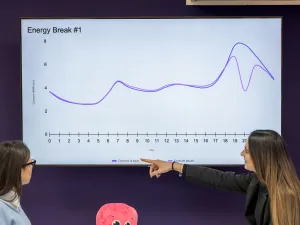
5G Energy Efficiency Optimization
Optimize energy management based on real-time data without sacrificing performance.
Transforming Excel Data into Predictive Business Intelligence
Foundation models transform Excel data into forecasts, enabling small companies to predict demand and costs without ML expertise.
Transformation of Tasks in Legal Practice
AI automates legal research and document review, accelerating case resolution while improving outcomes and attorney satisfaction.